
AI security has moved from a technical footnote to a boardroom priority, and nowhere faster than in the UAE. Artificial intelligence now sits on both sides of the fight: it powers the attacks aimed at your organization, and it powers the defenses that stop them. This guide explains what AI security really means in 2026, the new risks it brings, and what organizations in the UAE should do about it.
- AI security has two sides. Using AI to defend, and securing AI itself against misuse and new threats.
- AI is now the attacker too. Autonomous AI agents lower the barrier for attackers and speed up how fast known weaknesses are exploited.
- Your own AI use is a new risk. Staff pasting sensitive data into public AI tools (“shadow AI”) is one of the fastest-growing AI security threats.
- Defenders gain the most when AI stays under human control. AI accelerates detection, but a person must verify what it flags.
- For the UAE, this is strategic. As the country invests heavily in AI, AI security becomes a national and regulated-sector priority.
The basics
What is AI security?
AI security is the practice of protecting an organization in a world where artificial intelligence is part of both the attack and the defense. It covers two distinct things that are easy to confuse. The first is using AI to strengthen security: AI-driven detection, faster analysis, automated response. The second is securing AI itself: making sure the AI tools your people use, and the AI systems you build, do not become a new way in for an attacker or a new way for sensitive data to leak out.
A complete approach to AI security holds both sides at once. Ignore the first and you fall behind attackers who are already automating. Ignore the second and you open a door you did not know existed.
| AI as the attacker | AI as the defender |
|---|---|
| Autonomous agents scan and exploit at machine speed | AI correlates thousands of signals a human would miss |
| Lowers the skill barrier for attackers | Speeds up detection and triage in the SOC |
| Generates convincing phishing and social engineering | Flags anomalies and suspicious behavior early |
| Finds known, unpatched weaknesses faster than ever | Frees analysts to focus on real threats |
The offensive side
AI as the attacker
The most important shift in AI security is that the attacker of tomorrow is backed by a machine. Autonomous AI agents can now run reconnaissance, find weaknesses and attempt exploitation on their own. The research is clear that this is real, if not yet magic. We covered exactly what the numbers say, and where the human still wins, in our analysis of the rise of the AI pentester. The short version: AI is excellent at the known and repeatable, and still weak at the creative, chained attacks that cause real damage. But the barrier is dropping, and that changes your risk.
The defensive side
AI as the defender
On the other side, AI is a genuine force multiplier for defense. It reads the flood of logs and alerts that overwhelm a human team, correlates them, and surfaces what matters. In a modern security operations center, AI-driven detection cuts the time between a threat appearing and someone acting on it. The key word is someone: the strongest AI security setups keep a human in the loop, verifying what the machine flags before acting on it. AI advises, the analyst decides.
The blind spot
The new AI security threats: your own AI use
The risk most organizations underestimate is not a futuristic AI attacker. It is their own staff. Employees pasting client data, source code or credentials into public AI chat tools, so-called shadow AI, is one of the fastest-growing AI security threats in 2026. That data leaves your control the moment it is sent. Alongside it sit newer concerns: prompt injection against AI systems you deploy, models that leak their training data, and AI features switched on across your software stack without anyone assessing them.
Good AI security means getting visibility of where AI is already being used in your organization, setting clear rules for it, and choosing tools that keep sensitive data inside your walls rather than sending it to a third party.
The question is no longer whether to use AI. It is whether you can use it without handing your data, and your defenses, to someone else.
For the region
AI security for UAE organizations
For organizations in the UAE, AI security is not a side issue. The country is investing heavily in artificial intelligence across government and industry, which means both the opportunity and the exposure are growing at the same time. For regulated sectors like finance and healthcare, the rules on where data may go make the “securing AI itself” side of the equation especially important.
Three practical steps for a UAE organization: one, map where AI is already in use across your teams. Two, set a clear policy and choose AI tools that keep data local. Three, test your defenses against an AI-aware attacker, because that is what you now face.
Our approach
How Rootsec approaches AI security
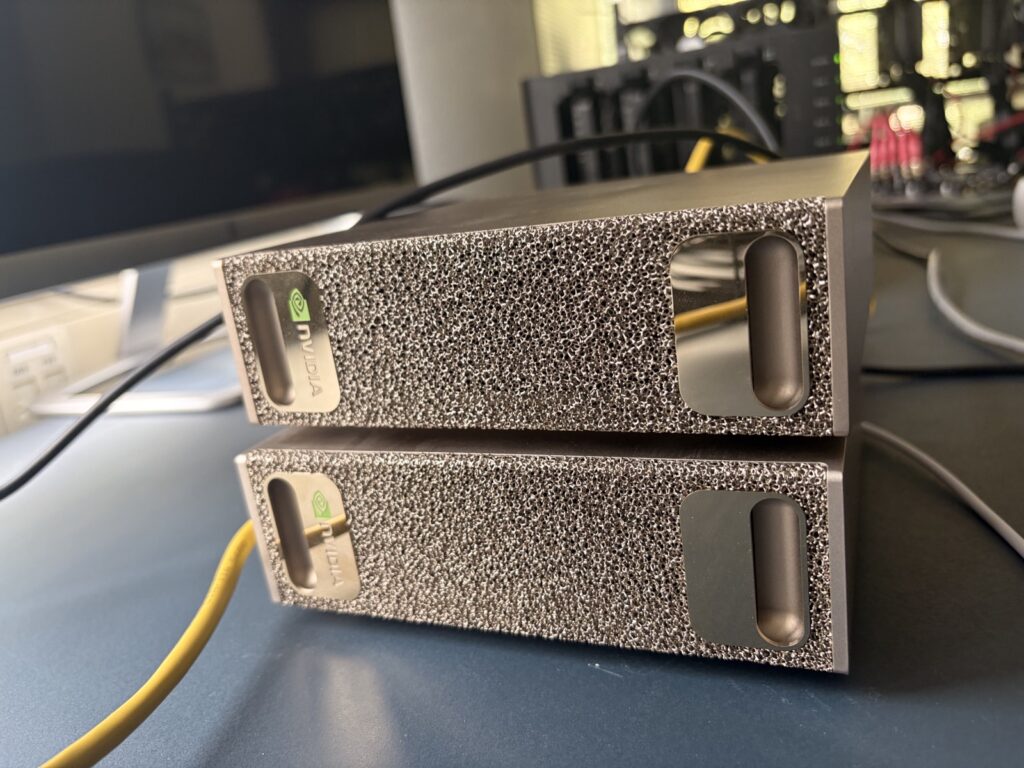
Rootsec runs AI-driven offensive security on our own local platform, so sensitive client data never leaves our environment. We bring that same principle to how we help clients think about AI security: use the power of AI, but keep it under human control and keep your data inside your walls. The machine accelerates the work; a human verifies every finding before it reaches a report. That is AI security done responsibly, and it is exactly the conversation UAE security teams need to have now.
In practice, that means testing the AI you rely on. Our AI security testing service probes LLMs, RAG pipelines and AI agents for prompt injection, data leakage and tool-calling abuse, so the AI in your stack does not quietly become the way in.
FAQ
Frequently asked questions
What is AI security?
AI security is protecting an organization in a world where AI is part of both attack and defense. It means using AI to strengthen your security, and securing the AI tools and systems you use so they do not become a new risk.
Is AI a threat to cybersecurity?
Both. AI helps attackers move faster and lowers the skill barrier, but it also gives defenders a powerful way to detect and respond. The outcome depends on who uses it better, and on keeping AI under human oversight.
What is the role of AI in cybersecurity?
On defense, AI correlates huge volumes of signals and speeds up detection and triage. On offense, it automates reconnaissance and exploitation. In both cases it is a force multiplier, not a replacement for human judgment.
How do we secure our company’s use of AI?
Get visibility of where AI is already used, set a clear policy, avoid pasting sensitive data into public AI tools, and choose solutions that keep data inside your environment. A modern pentest should also test your defenses against an AI-aware attacker.
Is your organization ready for AI-driven attacks?
In a strategy session we show you what an AI-aware attacker would find, and how to use AI on your own side without giving your data away. An honest look, not a sales pitch.
Further reading on managing AI risk: the NIST AI Risk Management Framework. This article reflects Rootsec’s own practitioner view; it is general guidance, not a substitute for a tailored assessment.