SOC meaning: what does SOC stand for?
SOC stands for Security Operations Center: a dedicated function that continuously monitors an organisation’s IT environment, detects malicious activity and responds to incidents before they become breaches. A SOC is not a product you buy — it is a combination of three things: people (analysts and incident responders), process (playbooks, escalation and reporting) and technology (the platforms that collect and correlate signals from your endpoints, servers, email and cloud).
The reason a SOC runs 24/7 is simple: attackers do. Ransomware operators deliberately strike at night, on weekends and during public holidays — exactly when nobody is watching a dashboard.
What does a SOC actually do?
1 · Monitor
Telemetry from endpoints, servers, email, identity and cloud flows into one platform, around the clock.
2 · Detect
Detection rules and AI correlation separate real attack behaviour from the thousands of harmless events per hour.
3 · Triage
Analysts investigate each alert: is this a false positive, a contained nuisance or an active intrusion?
4 · Respond
Compromised hosts are isolated, sessions killed and accounts locked — in minutes, not the next morning.
5 · Report & improve
Every incident feeds back into better detection rules — and into the audit-ready reporting your compliance framework expects.
SOC vs SIEM vs MDR vs XDR
These terms get mixed up constantly. The short version: SIEM and XDR are technology, a SOC is the capability that uses them, and MDR is that capability bought as a service.
| Term |
What it is |
In one line |
| SOC |
Team + process + technology |
The capability that watches and responds |
| SIEM |
Log collection & correlation platform |
The place where all signals come together |
| XDR |
Detection & response across endpoint, email, identity and cloud |
Modern detection technology, broader than antivirus |
| MDR / SOC-as-a-Service |
A managed 24/7 detection & response service |
A SOC you subscribe to instead of build |
Does your UAE business need a SOC?
Two forces push UAE organisations towards 24/7 monitoring. The first is compliance: frameworks such as ADHICS for healthcare in Abu Dhabi, CBUAE regulations for financial institutions, the UAE Information Assurance Regulation and the PDPL all expect organisations to detect and respond to security incidents — and to prove it. The second is reality: a ransomware intrusion typically unfolds over hours or days before encryption starts. With nobody watching, that window is a free run for the attacker. With a SOC, it is exactly where the attack gets caught.
A rule of thumb: if your organisation handles customer data or payments, runs operations that cannot afford downtime, or answers to a regulator or auditor — you need SOC coverage. The only real question is how you get it.
In-house, managed or hybrid: three ways to run a SOC
In-house SOC
Full control, but you need to recruit, train and retain a full analyst team to genuinely cover 24/7 — realistic only for large enterprises and government.
Managed SOC (SOC-as-a-Service)
A specialist provider runs the platform and the 24/7 monitoring for you. Live in weeks, no hiring, predictable cost. The right fit for most SMEs and mid-market companies in the UAE.
Hybrid
Your IT team handles business hours and context; an external SOC covers nights, weekends and specialist response. Common for organisations with an existing security team.
How Rootsec delivers a 24/7 SOC
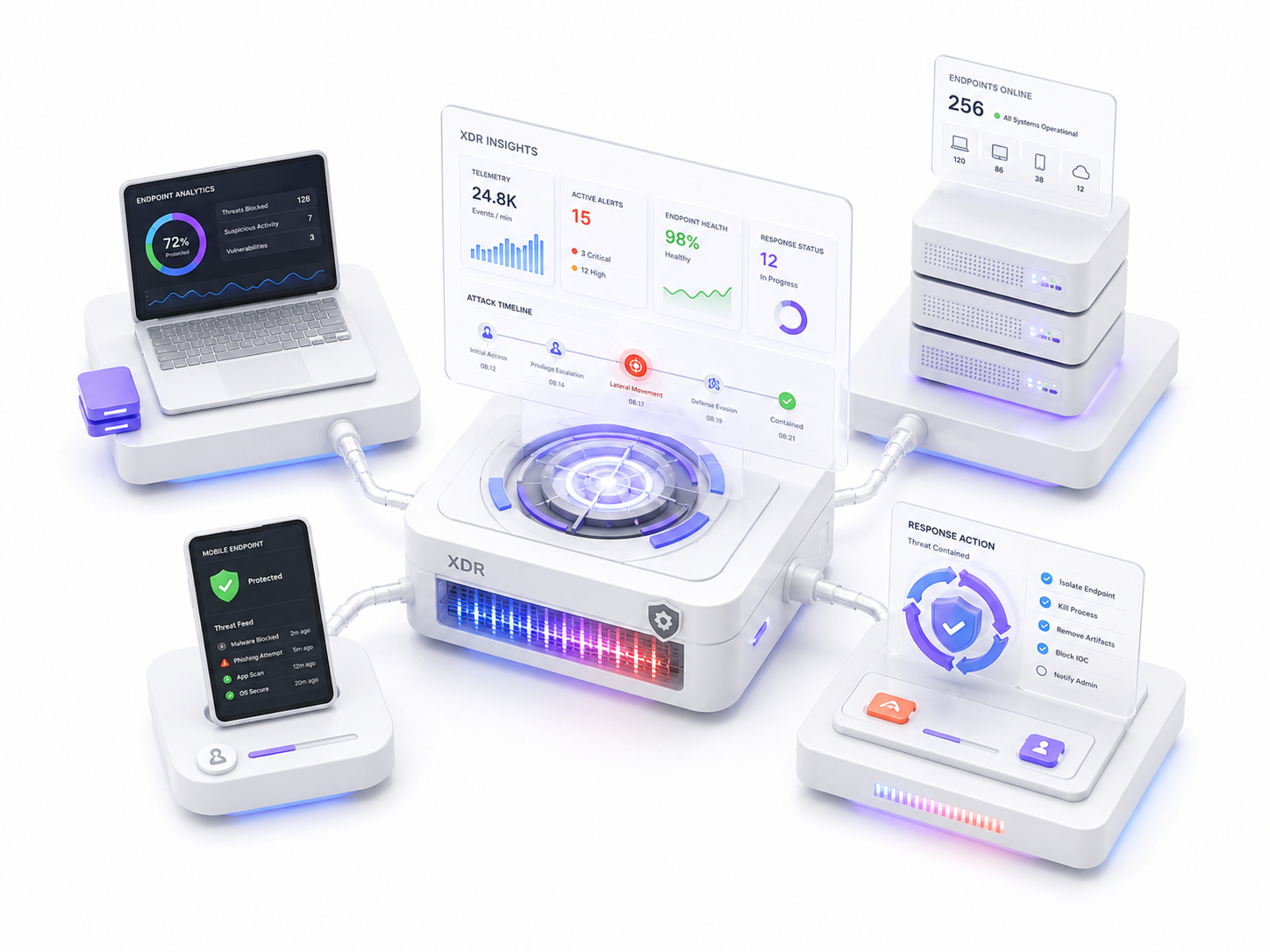
Rootsec runs a fully managed 24/7 SOC: one unified platform that combines AI-driven XDR detection across endpoints, email, identity and cloud with automated response and round-the-clock monitoring by our team — delivered as Managed XDR. When something fires at 3 a.m., it gets investigated and contained at 3 a.m. — not in the morning stand-up.
What makes our SOC different is where we come from: offensive security. Our team spends its days breaking into systems and running VAPT engagements — so we know exactly what attacker behaviour looks like and what detection must catch. We do not just watch dashboards; we tune the detection against the same techniques we use as attackers, and we regularly test that the SOC actually catches them.